Unified Skate
Independent skate shop energy. A more considered shopping experience.
Independent modernization concept. Not commissioned by, affiliated with, or endorsed by Unified Skate.
An independent Shopify modernization concept for a skateboard retailer, focused on mobile shopping, product discovery, compatibility guidance and a maintainable Online Store 2.0 architecture.
Current business website ↗
Reference only — this is not the concept demo.
Role · Solo product concept, UX/UI design, frontend development, technical review and Shopify architecture planning
Rethink a legacy storefront for customers choosing individual components or a complete setup. Make the catalog easier to explore, bring product details into focus and create a clearer route from browsing to building a skateboard.
Pair a responsive storefront with a proposed Shopify Online Store 2.0 theme architecture. Use reusable sections, structured product information and a guided setup concept while retaining Shopify as the commerce backend.
A storefront shaped around how skaters shop.
Unified Skate is an independent skateboard retailer. Its audience includes riders replacing a single component, buying a complete skateboard or putting together a setup from scratch. Each journey needs a different level of guidance.
The concept explores a new presentation layer for an existing Shopify business, with product discovery and mobile usability at the centre of the design.
Design scope
- Homepage and collection browsing
- Product detail and cart experience
- Mobile layouts and navigation
- Filtering, merchandising and buying guides
Architecture & planning
- Shopify Online Store 2.0 theme structure
- Reusable sections, blocks and JSON templates
- Product metafields and compatibility guidance
- Setup-builder, bundles and cross-sell concepts
Bring the shop’s character into the catalog.
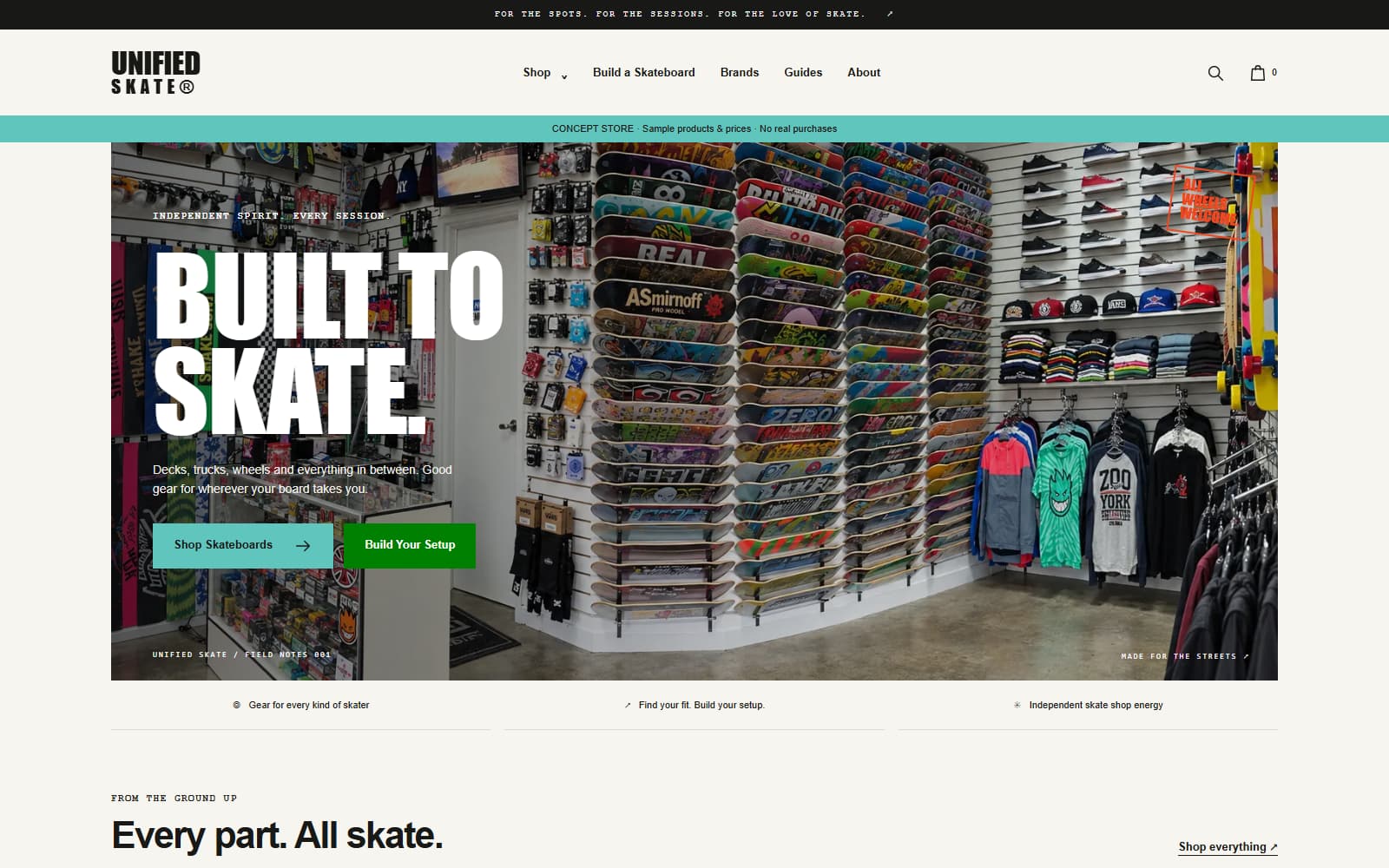
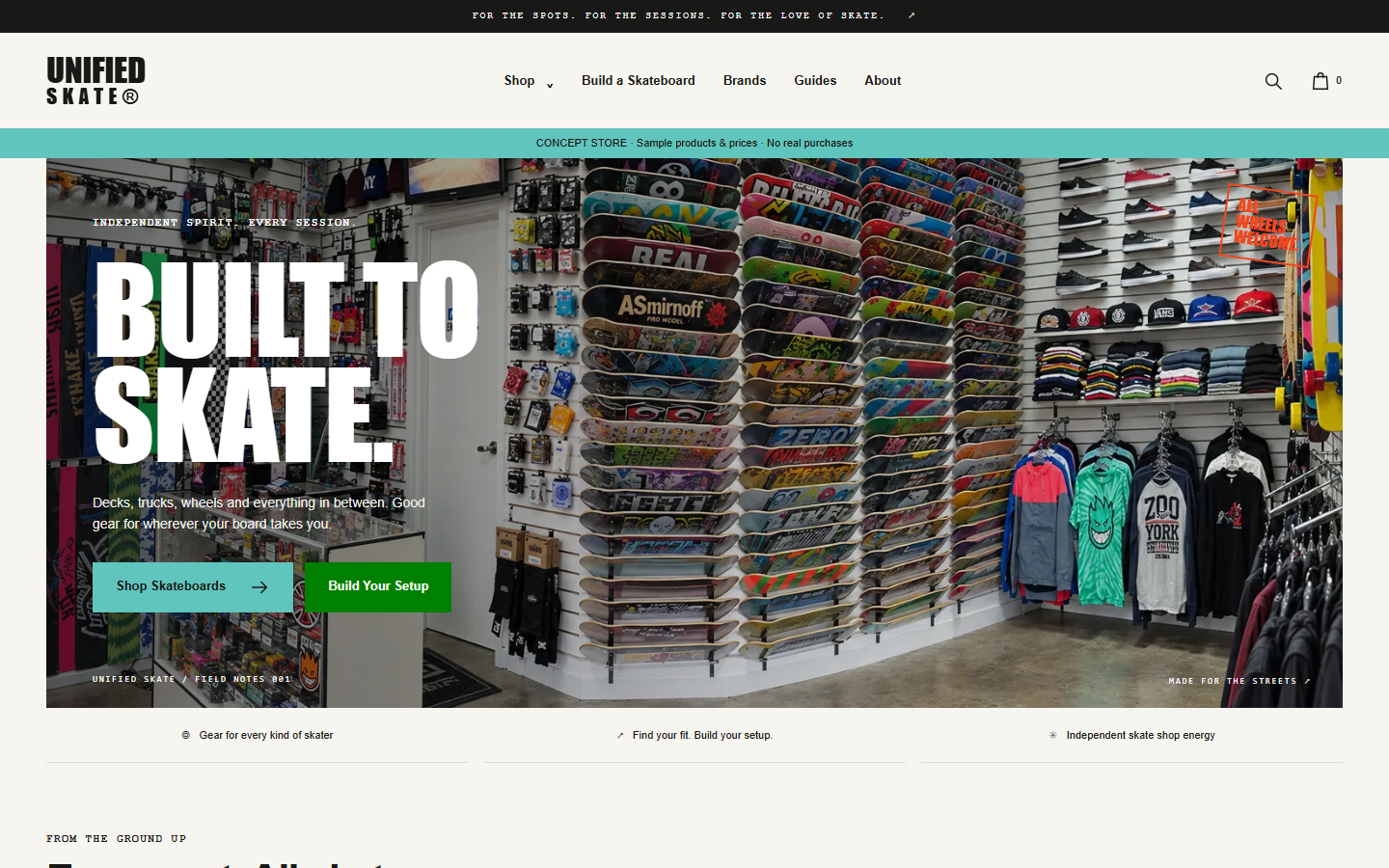
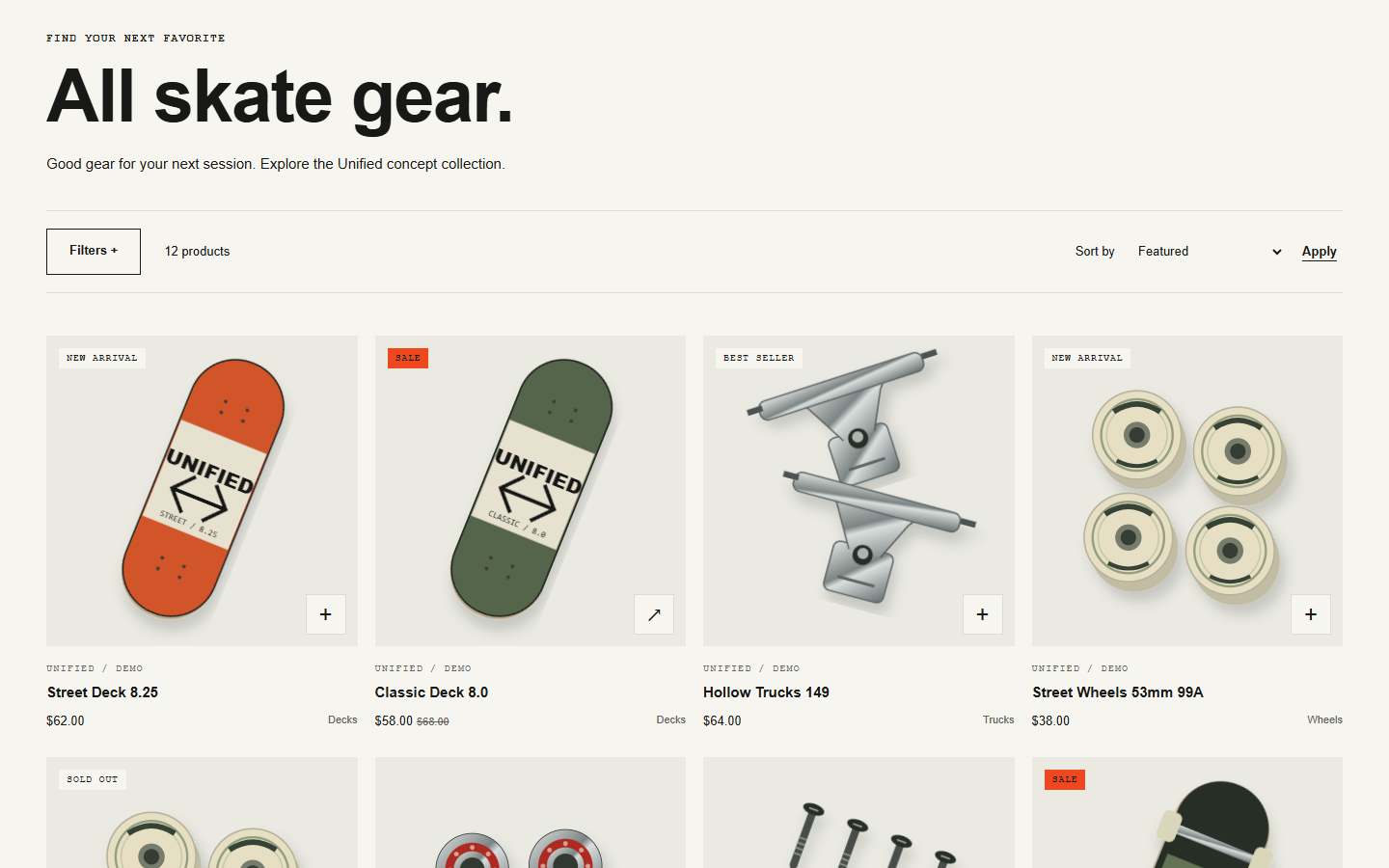
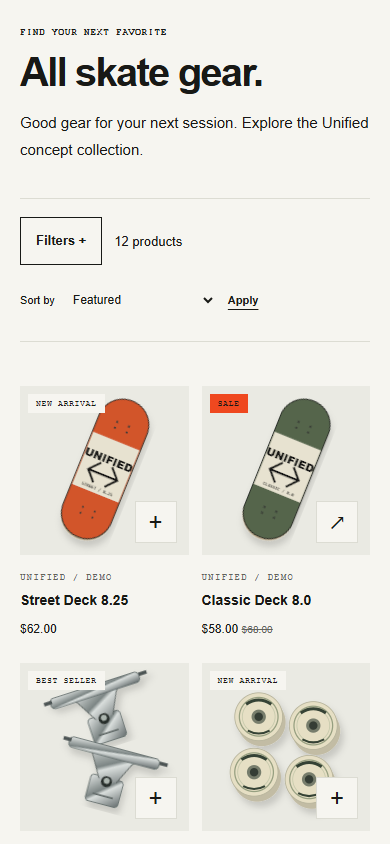
Large shop imagery and direct language give the homepage its identity. The catalog shifts to a quieter grid, making room for product images, dimensions, prices and availability labels.
These screenshots show the independent concept store. Products and prices are samples; no real purchases are offered.
Keep the next step within reach.
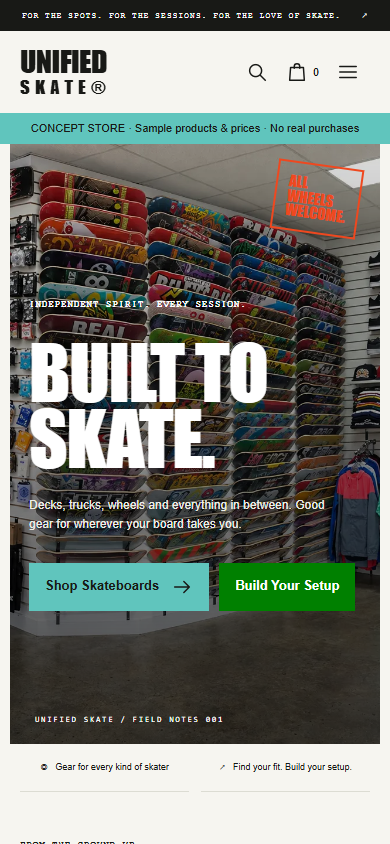
A compact header leaves space for the shop’s identity and primary actions. The mobile catalog uses two columns, with filtering and sorting above the products.
Help customers build a setup that fits.
The setup-builder concept follows a familiar sequence: choose a deck, match the trucks, then select wheels, bearings and hardware. The aim is to make relationships between components easier to understand.
Proposed product data
- Deck width
- Truck axle width
- Wheel diameter and durometer
- Riding style and intended use
Future uses
- Compatibility hints while browsing
- Relevant component recommendations
- Guided bundles and complete setups
- Buying guides linked to product attributes
These attributes are proposed as structured Shopify metafields. A production recommendation system would still need validated product data, compatibility rules and testing; this case does not claim a deployed compatibility engine.
Modernize the theme. Keep the commerce foundation.
The proposed implementation uses Shopify Online Store 2.0 rather than requiring a new commerce platform. Liquid templates, configurable sections and blocks separate presentation from catalog data and give future content updates a consistent structure.
Storefront layer
- Responsive HTML, CSS and JavaScript
- Liquid sections and reusable blocks
- JSON page and collection templates
- Product metafields for structured attributes
Commerce foundation
- Existing Shopify product catalog
- Collections, variants and inventory
- Shopify cart and checkout workflows
- Theme development with Shopify CLI and Git
The architecture is an implementation direction, not a completed migration of the retailer’s live store.
A visual direction and a practical foundation.
A complete modernization concept covering the storefront, mobile layouts and an implementation plan. The work establishes a visual direction and a proposed product-data model; it is not a production deployment. Conversion, sales, SEO and performance improvements remain goals, not measured results.